3D Isometric Landscape: Creative Uses and Design Possibilities
The 3D isometric landscape has emerged as a powerful tool for visual storytelling, offering a unique blend of realism and stylized simplicity. Whether you're a designer crafting a website background, a marketer planning an infographic, or a blogger illustrating a travel guide, this versatile format can bring your ideas to life with clarity and charm. In this article, we’ll explore what makes the 3D isometric landscape so compelling and how different professionals can leverage it for their creative projects.
What is a 3D Isometric Landscape?
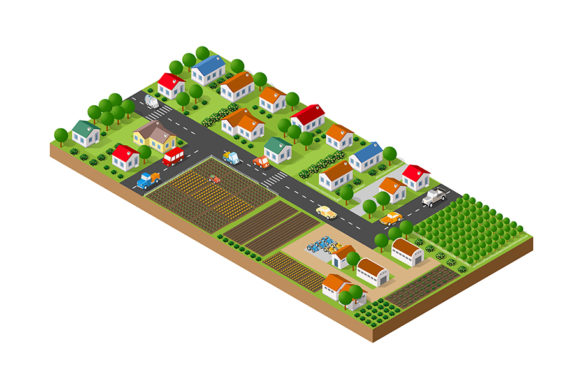
A 3D isometric landscape is a type of illustration that mimics a three-dimensional view using a two-dimensional plane. It uses isometric projection — a method where objects are drawn at fixed angles (typically 30 degrees) to create depth while maintaining equal scale on all axes. This technique allows for detailed yet clean representations of buildings, streets, trees, shops, and other urban elements in a cohesive and visually engaging way.
One of the key features of isometric landscapes is their ability to depict complex environments without overwhelming the viewer. Unlike traditional perspective drawings, which use vanishing points to simulate depth, isometric views offer a more balanced and symmetrical layout. This makes them especially useful for showcasing entire scenes like small towns, cityscapes, parks, and even marketplaces in one clear frame.
Why Use a 3D Isometric Landscape?
There are several reasons why a 3D isometric landscape might be the perfect choice for your project:
- Visual Clarity: The structured nature of isometric art helps viewers quickly understand spatial relationships between elements like houses, roads, and shops.
- Design Versatility: These landscapes work well in both digital and print formats, from app interfaces to posters and infographics.
- Scalability: Since they’re often vector-based, isometric illustrations can be resized without losing quality, making them ideal for responsive design.
- Stylized Aesthetics: With options for retro, modern, colorful, or minimalist styles, they fit into a wide range of branding and content strategies.
Creative Applications Across Industries
The beauty of the 3D isometric landscape lies in its adaptability. Here’s how various audiences can put it to work:
For Designers and Illustrators
Isometric landscapes provide a rich playground for experimenting with architecture, color palettes, and urban layouts. You could create a colorful 3D isometric landscape featuring a quaint village with homes, shops, and winding roads. Think about designing a set of icons representing different types of businesses — like a bakery, bank, or restaurant — each rendered in a consistent isometric style to maintain harmony across the composition.
These illustrations also serve as excellent templates for mockups. For example, a designer working on a new home or apartment concept could build an isometric town scene to showcase floor plans or room designs within a realistic context.
For Marketers and Entrepreneurs
Marketers love visuals that tell stories quickly. A 3D isometric landscape of a small town can act as a backdrop for product placements, such as showing a new store or service nestled among familiar surroundings. Imagine a travel company using a vibrant isometric cityscape to promote a destination — highlighting landmarks, local shops, and green spaces in a single glanceable image.
Infographics benefit greatly from these layouts too. By arranging data around a stylized map or environment, you can help users visualize trends, demographics, or economic patterns in a more intuitive way. A real estate agency might use an isometric illustration of a residential area to show property distribution, park locations, and nearby amenities.
For Bloggers and Content Creators
Blogs focused on lifestyle, travel, or urban development can incorporate 3D isometric landscapes to add visual interest to articles. A post about sustainable living might feature an isometric village with eco-friendly homes, solar panels, and community gardens. Or a travel blog could present an illustrated city tour with labeled shops, restaurants, and public transport, making the experience more immersive and shareable.
These images can also be used as headers or section dividers in long-form content. A retro-style isometric street scene with a banner over a shop or a park bench can break up text and guide readers through different topics seamlessly.
For Educators and Presenters
In education and training, isometric landscapes can simplify complex subjects. Geography lessons, for instance, can become more interactive when students see a 3D isometric representation of a town’s layout, complete with roads, buildings, and environmental details. Similarly, business presentations might use an isometric city or village to demonstrate growth, infrastructure changes, or demographic shifts over time.
Teachers can even create custom maps or town models for classroom activities, encouraging students to plan out their own neighborhoods or discuss urban planning principles in a hands-on way.
Practical Tips for Creating Effective Isometric Landscapes
If you're considering using a 3D isometric landscape in your work, here are some tips to keep your results clear, organized, and impactful:
- Plan Your Layout First: Before jumping into drawing, sketch out the basic structure of your town or city. Decide on the placement of major elements like main roads, buildings, and green spaces to avoid clutter.
- Use Consistent Angles and Proportions: Stick to the standard 30-degree angle and maintain uniform scaling across all components. This ensures a cohesive look and prevents distortion.
- Balance Detail with Simplicity: While adding architectural details like windows, doors, and rooftops can enhance realism, too much detail can make the scene confusing. Aim for a middle ground that feels alive but not overcrowded.
- Choose the Right Color Scheme: A well-thought-out palette can transform an isometric landscape from flat and forgettable to vivid and inviting. Consider using muted tones for a professional look or bold colors for a playful, youthful vibe.
- Optimize for Different Platforms: If your goal is to use the illustration online, ensure it’s optimized for web resolution and file size. For print, focus on high-quality output and accurate color reproduction.
Exploring Variations and Styles
One of the joys of working with isometric landscapes is the variety of ways you can approach them. Here are some popular variations to consider:
- Retro Style: A nostalgic take using muted colors and simple shapes works great for vintage-themed websites or marketing materials.
- Modern Minimalist: Clean lines, limited color schemes, and geometric precision suit contemporary brands and tech-related content.
- Colorful and Playful: Ideal for children's books, educational tools, or entertainment-focused sites, this style uses bright hues and whimsical elements to capture attention.
- Urban vs. Rural: Depending on your message, you can choose to emphasize a bustling city center or a quiet village setting. Each offers different opportunities for storytelling.
Real-World Examples and Inspiration
To get started, consider these real-world applications of 3D isometric landscapes:
- Travel Brochures: Many travel agencies now use isometric city backgrounds to give a sense of place and culture without needing photographs.
- E-Commerce Mockups: Showcasing products in a simulated storefront or apartment adds context and enhances buyer confidence.
- Mobile App UI: Developers use isometric scenes to represent user journeys or settings in a game-like, intuitive interface.
- Infographic Backgrounds: Adding an isometric illustration behind charts and graphs gives the data a narrative and emotional anchor.
Take inspiration from existing templates available online. Look for assets labeled as “3D isometric landscape,” “city background,” or “urban illustration” on platforms like Adobe Stock, Shutterstock, or graphic design marketplaces. These can be adapted to fit your brand identity by changing colors, adding logos, or integrating specific icons like a bakery or park.
Tools and Resources for Building Your Own
Creating a 3D isometric landscape doesn’t require advanced 3D modeling skills. Many tools allow you to build these scenes using vector graphics and pre-made assets:
- Adobe Illustrator: Offers precise control over shapes and layers, perfect for building detailed isometric environments.
- Figma: Great for collaborative design work, with access to community-built isometric icon sets and templates.
- Blender (with orthographic view): Allows for 3D modeling that can be exported into isometric projections for use in 2D design software.
- Online Generators: Some tools let you drag-and-drop pre-designed buildings and streets to create custom isometric scenes instantly.
Whether you're starting from scratch or using pre-made components, remember to maintain consistency in style and scale. Mixing assets from different sources can lead to mismatched proportions and a disjointed final piece.
How to Keep Your Work Organized and Original
As with any design project, organization is key. When building a 3D isometric landscape, label your layers clearly and group related elements together — for example, separate groups for houses, shops, trees, and roads. This makes editing and reusing parts of your design much easier.
To ensure originality, avoid simply copying real-world cities. Instead, think creatively about how to reinterpret urban life. Maybe your town has floating homes, futuristic architecture, or a central market surrounded by lush greenery. The possibilities are endless once you embrace the flexibility of isometric illustration.
Also, consider the audience. A landscape designed for a child-friendly site will have different needs than one intended for a financial report. Tailor your details and tone accordingly to maximize engagement and communication.
Final Thoughts
3D isometric landscapes are more than just eye-catching visuals — they’re functional, adaptable, and full of creative potential. From helping marketers craft compelling narratives to assisting educators in making abstract concepts tangible, these illustrations open the door to innovative storytelling and design solutions.
By understanding the basics of isometric projection and exploring the many ways to apply it, you can unlock fresh ideas for your next project. So whether you're designing a background for a blog, creating a template for a presentation, or simply looking for a new way to express your vision, don’t underestimate the power of a well-crafted isometric landscape.