Integrating the Family Hug Silhouette 3D Model into Creative and Professional Workflows
The Family Hug Silhouette 3D Model is more than just a digital asset—it’s a versatile tool that can enhance storytelling, design projects, and visual presentations across various industries. This model captures an emotional moment in a stylized yet realistic way, making it ideal for those who want to convey warmth, connection, or fantasy elements without overwhelming detail. Whether you're a hobbyist exploring personal 3D printing, a marketer looking to add depth to your campaigns, or an educator designing engaging classroom materials, understanding how to use this model effectively can streamline your creative process.
Understanding the Role of the Family Hug Silhouette 3D Model
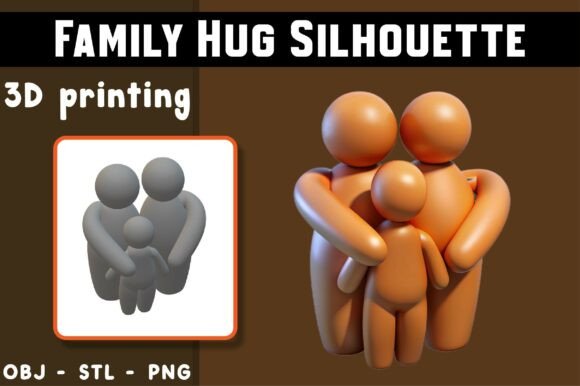
In the context of 3D modeling and printing workflows, the Family Hug Silhouette 3D Model serves as a ready-to-use component that can be integrated into larger scenes or used independently as a focal point. Its expressive details and gentle charm make it suitable for both decorative and narrative purposes. The model represents a magical family moment—perhaps a creature emerging from the shadows or a heartwarming embrace between characters—and its design emphasizes clarity and usability for a wide range of applications.
This model fits naturally into processes involving character creation, scene composition, or thematic design. It's particularly useful when you need to visualize human interaction with mythical or fantastical elements. As part of a broader workflow, it could be used during the planning phase of a project, as a conceptual piece in early design stages, or as a final decorative element once the main structure is complete.
Use Cases Across Different Industries
Depending on your role or interest, the Family Hug Silhouette 3D Model can be applied in several ways:
- Collectors & Hobbyists: Add the model to your physical or digital collection to showcase unique, story-rich designs. It works well as a standalone print or embedded within custom dioramas.
- Marketers & Content Creators: Use the OBJ file format for AR experiences, social media previews, or product showcases. The emotional resonance of the scene can help engage audiences more deeply.
- Game Developers & Animators: Integrate the silhouette into game environments or animated sequences to depict key moments such as character bonding or magical awakenings.
- Designers & Decorators: Incorporate the model into home décor, themed displays, or exhibition setups. Its clean geometry makes it easy to scale and position in real-world spaces.
- Educators & Presenters: Utilize the PNG render as a reference image for teaching art concepts, storytelling through visuals, or even in science classes to demonstrate anatomy or spatial relationships.
Preparing to Use the Family Hug Silhouette 3D Model
Before integrating the Family Hug Silhouette 3D Model into your workflow, consider a few preparatory steps to ensure compatibility and ease of use:
- Review File Formats: The model comes in STL, OBJ, and PNG formats. Choose the one that aligns best with your intended application—STL for 3D printing, OBJ for digital visualization, and PNG for reference or marketing materials.
- Check Printer Compatibility: If using the STL file, open it in your preferred slicer software to assess scaling, support requirements, and print orientation. Adjust settings based on your printer’s specifications and the material you plan to use.
- Assess Scene Integration: When working with the OBJ file in a 3D software environment (like Blender, Maya, or SketchUp), evaluate how it will fit into the surrounding assets. Pay attention to lighting, texture mapping, and camera angles to maintain visual harmony.
- Understand Design Limitations: Since the model is AI-assisted, there may be subtle imperfections or variations depending on the platform or printer. Always review the model closely before committing to large-scale production or public display.
Workflow Integration: Before, During, and After Implementation
When planning your project, consider how the Family Hug Silhouette 3D Model might contribute at different stages:
Before the Project Begins
During the ideation or concept development phase, the model can serve as inspiration or a placeholder. For example, if you’re designing a fantasy-themed board game, placing the silhouette in a mock-up scene helps establish the tone and narrative direction. It can also assist in defining color schemes, lighting, or background elements that complement the emotional theme of the model.
During Execution
Once you move into the implementation stage, the model becomes a functional asset. If you're creating a mixed-media installation, the STL file can be printed alongside other components. In digital environments, importing the OBJ allows you to animate the model or interact with it via AR tools. Begin by setting up your workspace or software to accommodate the model’s dimensions and features. Use layers or groups to keep it organized within your project hierarchy.
After Completion
Post-production, the Family Hug Silhouette 3D Model continues to offer value. A high-quality rendered PNG can be used in promotional materials, portfolios, or client presentations. For printed models, ensure proper finishing—such as sanding, painting, or sealing—to maintain the integrity of the design. Collectors may appreciate the model as-is, while others may see it as a starting point for customization or modification.
Combining with Other Tools and Resources
To maximize the potential of the Family Hug Silhouette 3D Model, integrate it with complementary tools and platforms:
- 3D Printing Software: Programs like Cura or PrusaSlicer allow you to adjust settings for optimal print quality. Make sure to check layer heights, infill density, and print orientation before proceeding.
- Modeling and Animation Platforms: Use Blender or Unity to explore the model’s movement possibilities. You might animate the family hug as part of a cinematic sequence or interactive experience.
- Augmented Reality Apps: Import the OBJ into AR platforms like Adobe Aero or Spark AR to create immersive previews or virtual showrooms where users can view the model in real space.
- Collaboration Tools: Share the model with team members via cloud storage services or version control systems to ensure everyone has access to the latest iteration.
For example, a designer creating a children's book about magical families might start with the PNG render for layout sketches, then import the OBJ into a 3D animation tool to create a short preview video. Later, they might produce a small batch of STL prints for tactile prototypes or author events.
Practical Tips for Implementation
Here are some actionable suggestions to help you implement the Family Hug Silhouette 3D Model smoothly:
- Scale Appropriately: Ensure the model is scaled to match the rest of your scene or physical space. Use reference objects or measure against known sizes in your environment.
- Optimize Print Settings: For beginners, use default slicing profiles first. Once familiar with the model, tweak parameters such as nozzle temperature or print speed to enhance surface finish.
- Test Before Printing in Bulk: Always do a test print on a smaller scale. This saves time and resources while allowing you to catch any issues related to supports, overhangs, or warping.
- Consider Orientation: Printing the model flat versus upright can affect support structures and overall print time. Test both orientations to determine which yields the best results.
- Organize Digital Assets: Store all versions of the model (OBJ, STL, PNG) in a clearly labeled folder. This helps maintain consistency and avoids confusion during revisions or multi-platform use.
If you're incorporating the model into a larger scene, think about how it interacts with light and shadow. Its silhouette nature means it often performs best under directional lighting, which highlights the emotional contours of the design.
Quality Control and Long-Term Use
Maintaining quality control is essential, especially if the model is used in professional or commercial contexts. Here are a few considerations:
- Verify Geometry Integrity: Before exporting or printing, run a mesh check in your 3D software to detect and fix issues like non-manifold edges or inverted normals.
- Monitor Print Quality: Inspect early prints for alignment, resolution, and structural accuracy. If necessary, refine the model or adjust your printer calibration.
- Document Your Process: Keep notes on successful print settings, software versions, and any modifications made. This documentation ensures consistent results over time and aids future users or collaborators.
- Plan for Maintenance and Updates: Even though the model is static, consider revisiting it periodically to adapt to new software standards or customer expectations.
Long-term, the Family Hug Silhouette 3D Model can become a staple in your creative toolkit. By maintaining good practices around organization and updates, you’ll find it easier to reuse the model in new projects, repurpose it for different audiences, or combine it with other assets for enhanced visual impact.
Real-World Examples and Workflow Scenarios
Let’s look at a few scenarios where the model adds tangible value:
Scenario 1: Home Décor Enthusiast
A user interested in home décor downloads the STL file and prints it at a 50% scale using resin for a polished finish. They place it on a shelf next to fairy lights and a miniature forest setup, enhancing the magical atmosphere of their living room. The model becomes a conversation starter and a cherished keepsake.
Scenario 2: Game Developer
An indie game developer uses the OBJ file to build a scene where players encounter a mystical family. They animate the model subtly to simulate breathing or movement, adding emotional weight to the moment. The model is then optimized for performance and exported for use in the game engine.
Scenario 3: Marketing Campaign
A brand launching a line of family-themed toys includes the PNG render in their campaign visuals. The image is used across social media, email newsletters, and website banners. Its whimsical charm resonates with parents and fans of fantasy content alike.
Conclusion
The Family Hug Silhouette 3D Model offers a compelling blend of artistic expression and technical accessibility. Whether you're printing it for a personal collection, embedding it in a digital presentation, or using it as a storytelling device, its design encourages thoughtful integration into diverse workflows. By preparing properly, choosing the right file format, and leveraging supporting tools, you can bring this enchanting moment to life with minimal effort and maximum impact.
Remember, the goal isn’t just to use the model—but to understand how it functions within your specific context. With a little planning and attention to detail, the Family Hug Silhouette 3D Model can become a meaningful addition to your creative or business process.